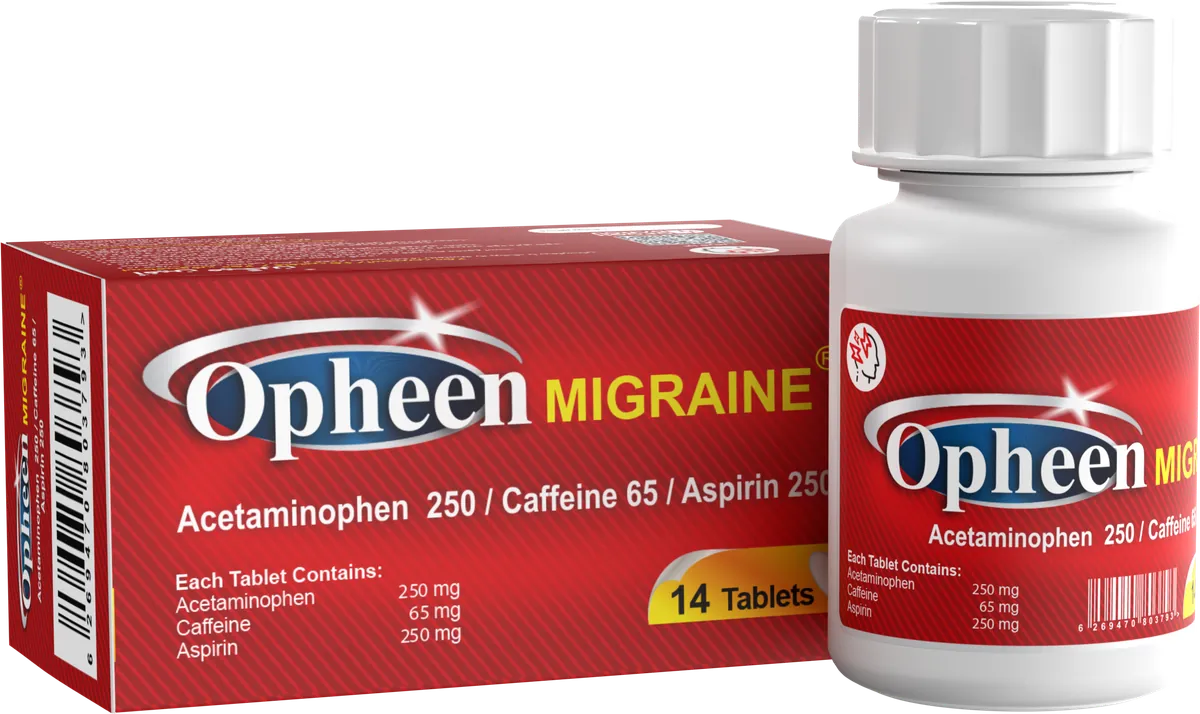
 Analgesic Tablet
Opheen Migraine is a combination medicine containing acetaminophen, aspirin and caffeine, used to relieve migraine headaches and mild to moderate pain.
About the product
Opheen Migraine is a combination medicine containing acetaminophen, aspirin and caffeine, used to relieve migraine headaches and mild to moderate pain. Each Opheen Migraine tablet contains 250 mg of acetaminophen, 250 mg of aspirin and 65 mg of caffeine, a combination that helps reduce pain, fever and inflammation.
The usual dose for adults and people over 16 is two tablets every 6 to 8 hours, after food and with a full glass of water. Opheen Migraine must not be taken together with other medicines containing acetaminophen or aspirin, and its use during pregnancy, breastfeeding or in people with gastrointestinal or heart disease or clotting disorders must be under a doctor's advice.
Each Opheen Migraine tablet contains acetaminophen 250 mg, aspirin 250 mg and caffeine 65 mg
- General guidance
This medicine has been prescribed for your current condition ; do not use it in similar cases or recommend it to others.
If you have bought this medicine without a prescription, consult a pharmacist about how and how much to take. Before use, tell your doctor or pharmacist about the following:
- Any allergies
- Use of other medicines
- Pregnancy or breastfeeding
- Other illnesses
Use and audience
- Dose and method of use
Before taking this medicine, tell your physician or pharmacist about the use of any other medicine, herbal or traditional product or supplement.
The dose of any medicine is determined by the physician, but the general dose of this medicine is as follows:
In adults and people over 16 years: 2 tablets every 6 to 8 hours after food with a full glass of water.
If you forget to take the medicine
Take the missed dose as soon as possible on the same day.
Use later doses as usual.
Do not double the dose.
- Pregnancy and breastfeeding
Use of this medicine during pregnancy, especially in the last trimester, is not recommended except in special circumstances and at the discretion of a specialist physician.
Use of this medicine during breastfeeding is also not recommended.
If use is necessary as prescribed by a specialist physician, do not breastfeed the child during the course of treatment.
Warnings
- Contraindications
Must not be used in children under 12 years.
Avoid taking this medicine together with other compounds containing acetaminophen or aspirin.
- Warnings and precautions
If you take this medicine as an over-the-counter product without a prescription, you should note the following points.
If you take too much, see a physician or hospital immediately.
If pain does not improve after 10 days or fever after 3 days, consult a physician.
Avoid taking the medicine close to bedtime.
This medicine should be used with caution in patients with heart disease. It should not be used in patients with arrhythmia.
Use of the medicine for more than 10 days a month is not recommended.
If you need to take this medicine together with anticlotting medicines, consult your physician or pharmacist.
Because this combination contains aspirin, the medicine can cause gastrointestinal ulcers and bleeding. This risk increases in the case of a stomach ulcer, concurrent use of non-steroidal anti-inflammatory drugs, concurrent alcohol use or long-term use of the medicine, and in people over 60 years.
If this medicine is used with other compounds containing acetaminophen, the risk of liver side effects increases ; the maximum permitted dose of acetaminophen is 4 grams a day. This medicine must not be used in children and adolescents with viral infections including chickenpox or influenza ; behavioral changes with nausea and vomiting are early signs of Reye's syndrome, and if they occur the medicine must be stopped and your physician told.
- Drug interactions
Barbiturates, hydantoins and carbamazepine ; other antihistamines and nerve medicines such as antidepressants and sedatives ; activated charcoal ; cimetidine ; oral contraceptives ; mexiletine ; isoniazid ; lamotrigine ; fluoroquinolones ; monoamine oxidase inhibitors such as selegiline ; hyaluronidase ; influenza virus vaccine (live attenuated) ; ketorolac (nasal, systemic) ; masimorelin ; omacetaxine ; sulfinpyrazone ; urokinase ; vaccines containing chickenpox virus ; angiotensin-converting enzyme inhibitors ; spironolactone ; sulfinpyrazone and ticagrelor.
- Side effects of Opheen Migraine
Alongside its desired therapeutic effects, any medicine may cause some unwanted effects, although not all of these effects are seen in one person. If any of these effects occur, keep your physician or pharmacist informed: stomach pain, gastrointestinal ulcers, indigestion, nausea and vomiting, bleeding, tinnitus, skin rash and hives, bruising or bleeding for no explainable reason, asthma and shortness of breath, bronchospasm, anemia, low blood pressure, tachycardia, raised liver enzyme levels, kidney problems, liver problems, hearing loss, Reye's syndrome, angiedema and anaphylactic reactions, severe dizziness or fainting.
- Storage conditions
Store below 30 degrees Celsius, away from light and moisture.
Keep out of the reach and sight of children.
Do not use expired medicine.
- Packaging
Each box contains a container with 14 or 20 Opheen Migraine tablets.
Full specifications
Opheen MigraProduct specifications
Specifications
- p
- هر قرص افین میگرن حاوی استامینوفن ۲۵۰ میلیگرم، آسپیرین ۲۵۰ میلیگرم و کافئین ۶۵ میلیگرم
- p
- راهنماییهای عمومی
- p
- این دارو برای درمان بیماری فعلی شما تجویز شده است لذا از مصرف آن در موارد مشابه و یا توصیه به دیگران خودداری نمایید.
- p
- در صورتی که این دارو را بدون نسخه پزشک تهیه نموده،اید در خصوص نحوه و میزان مصرف دارو با داروسازمشورت نمایید.
- p
- قبل از مصرف، موارد زیر را به پزشک یا داروساز اطلاع دهید:
- p
- وجود هرگونه حساسیت
- p
- استفاده از سایر داروها
- p
- بارداری یا شیردهی
Directions
| Directions | پیش از مصرف این دارو، استفاده از هرگونه داروی دیگر یا فرآوردههای گیاهی، سنتی و مکمل را به پزشک یا داروساز اطلاع دهید. |
|---|---|
| مقدار مصرف هر دارو را پزشک تعیین میکند، ولی مقدار مصرف این دارو به طور عمومی به قرار زیر است: | |
| در بزرگسالان و افراد بالای ۱۶ سال | ۲ قرص هر ۶ تا ۸ ساعت بعد از غذا و همراه با یک لیوان کامل آب. |
| در صورت فراموشی مصرف دارو | دوز فراموششده را در اسرع وقت در همان روز مصرف کنید. دوزهای آتی مطابق روال گذشته مورد استفاده قرار گیرد. |
Warnings
| Warnings | مصرف این دارو در دوران بارداری، بهویژه در سهماهه آخر بارداری توصیه نمیشود، مگر در شرایط خاص و به تشخیص پزشک متخصص. |
|---|---|
| مصرف این دارو در دوران شیردهی نیز توصیه نمیشود. | |
| در صورت ضرورت مصرف دارو طبق تجویز پزشک متخصص، از شیر دادن به کودک در طول دوره درمان خودداری نمایید. | |
| در کودکان زیر ۱۲ سال نباید مصرف شود. | |
| از مصرف همزمان این دارو با سایر ترکیبات حاوی استامینوفن یا آسپیرین خودداری نمایید. | |
| در صورتی که دارو را به صورت OTC و بدون تجویز پزشک مصرف می کنید باید به نکات زیر توجه نمایید. |
Storage
| Storage | در دمای کمتر از ۳۰ درجه سانتیگراد، دور از نور و رطوبت نگهداری شود. |
|---|---|
| از دسترس و دید کودکان دور نگهدارید. | |
| از مصرف داروی تاریخ گذشته خودداری نمایید. | |
| بستهبندی |
Same category and line